Restoring an Old Mosaic Surface: What the Process Actually Involves
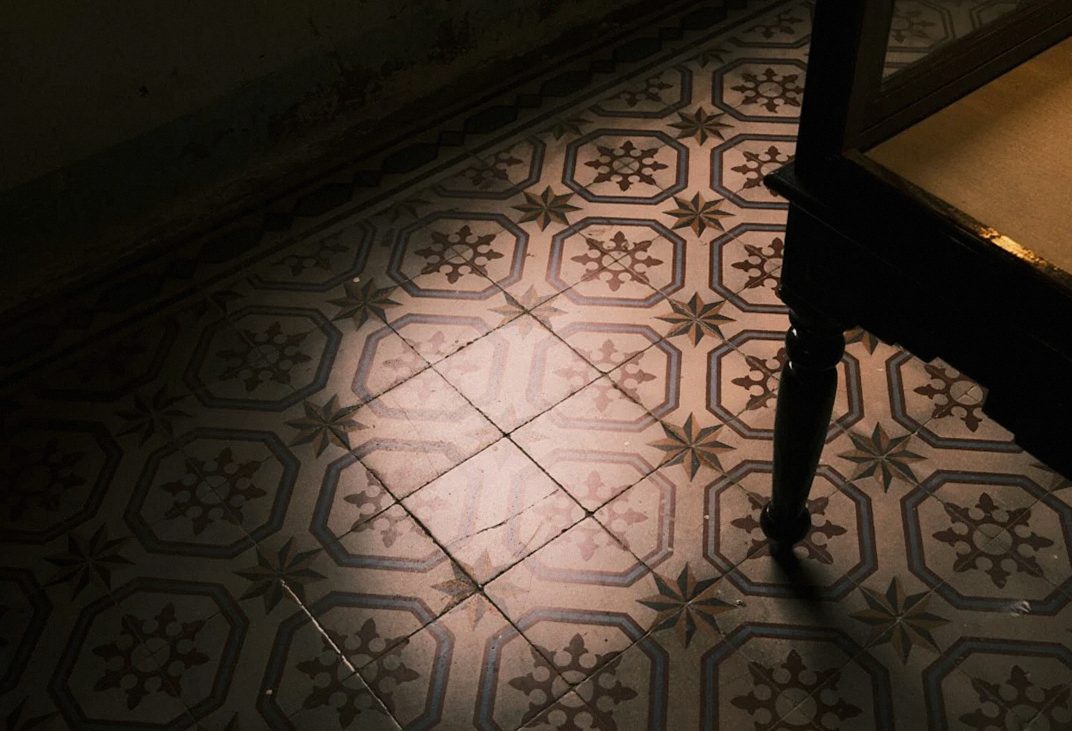
Older mosaic surfaces in Los Angeles homes and commercial buildings are more common than people expect. Craftsman bungalows from the 1920s often have original tile in the bathroom. Mid-century apartment buildings sometimes have lobby floors that have never been replaced, just covered. When those surfaces come back into view, the question is usually: can this be saved, and what does saving it actually involve?
Assessment before anything else
The first step in any restoration is a condition assessment. Ruth photographs the surface in sections, maps the location of every missing tile and every cracked grout joint, and checks the substrate for soft spots that indicate water damage beneath the surface.
A mosaic surface can look mostly intact and still have significant substrate problems. Tapping individual tiles with a wooden dowel reveals hollow spots where the adhesive bond has failed. Those tiles are loose even if they have not yet shifted, and they need to be re-bonded before any cosmetic work begins.
Sourcing period-appropriate tile
Matching a tile from a 1930s bathroom is not straightforward. Production tile from that era was often slightly irregular in size and color, which is part of what makes it look right. A modern replacement tile, even in the same nominal color, can look conspicuously new against aged originals.
Ruth sources replacement tile from a regional tile archive in Pasadena that holds discontinued and salvaged tile from the early to mid-twentieth century. The archive is not comprehensive, but it covers several the standard colors and formats used in California residential construction from roughly 1910 to 1970. When an exact match is not available, the closest option is used and the repair is documented so the client knows what was replaced.
Grout matching on aged surfaces
New grout applied next to aged grout looks different even when the color is nominally the same. Aged grout has absorbed dust, cleaning products, and in some cases wax, which shifts its tone. Ruth hand-mixes grout for every restoration project and tests it against the existing surface before applying.
The test patch is left to cure for 48 hours before Ruth assesses the match. Grout color shifts as it dries, and a color that looks right wet can be noticeably lighter when cured. Two or three rounds of adjustment are normal on a restoration project.
What cannot be saved
Some surfaces are too far gone for restoration to make sense. If more than 30 to 40 percent of the tile is missing, or if the substrate has failed across a large area, the cost of restoration can approach or exceed the cost of a new installation. Ruth will say so directly if that is the case.
Occasionally a client wants to preserve a surface for sentimental reasons even when the economics do not favor it. That is a legitimate choice, and Ruth will work through the options honestly. But the assessment comes first.
If you have an older mosaic surface and are not sure whether it is worth restoring, a condition assessment is the right first step. Ruth can usually give a clear picture of what is there and what it would take to bring it back.